7 Best Industrial Drip Trays for Global Buyers?
Choosing the right industrial drip tray is a practical decision, not a simple product comparison. A tray may look strong in photographs, yet fail under a heavy pump or uneven floor. Global buyers must examine material quality, load capacity, chemical resistance, drainage design, and replacement support. These details affect workplace cleanliness, equipment protection, and long-term operating costs.
This guide reviews seven industrial drip tray options for factories, workshops, warehouses, and maintenance areas. The selection focuses on realistic use conditions, including oil containers, hydraulic equipment, batteries, and leaking machinery. Steel trays often provide impressive strength, while polyethylene models offer lighter handling and broader chemical compatibility. However, neither material suits every application.
Small details matter. A raised edge can contain a sudden spill. A smooth surface can reduce cleaning time. Forklift access may also influence the best size. Buyers should confirm dimensions, weight limits, packaging, and delivery conditions before ordering internationally. Regional safety requirements can differ, so supplier documentation deserves careful review.
No tray is perfect. A cheaper model may become costly after repeated bending, corrosion, or difficult disposal. I have also found that product descriptions sometimes hide important limitations. That point deserves attention. The best choice depends on the liquid, equipment, workspace, and maintenance routine. This overview aims to provide clear, experience-based guidance without treating one design as universally superior. It helps purchasing teams compare practical value, not just the lowest listed price.
Industrial Drip Trays: Materials, Load Ratings, and 110% Spill Capacity
7 Best Industrial Drip Trays for Global Buyers?
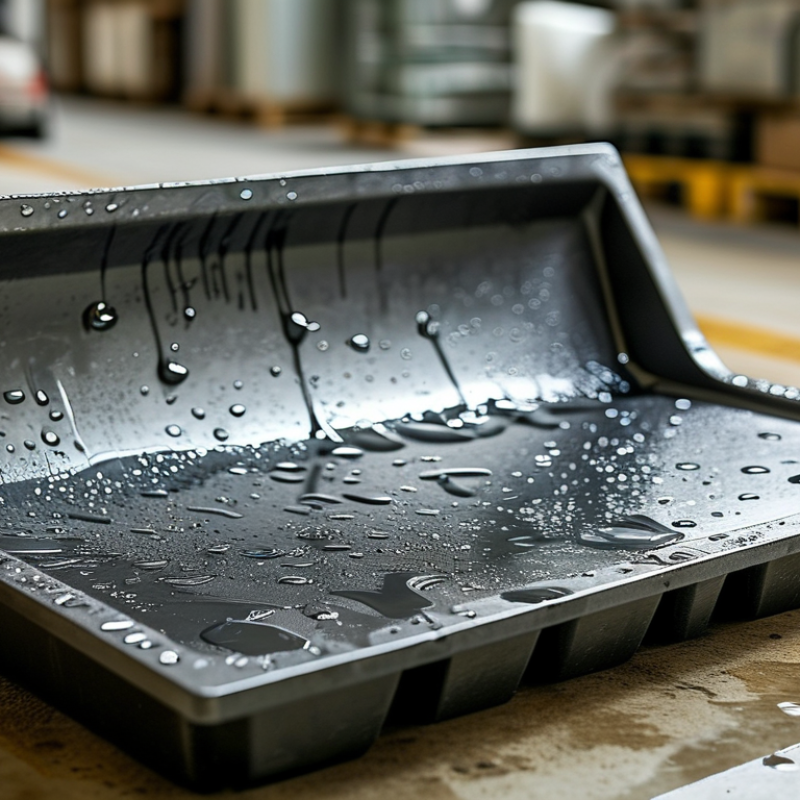
Industrial drip trays should be selected by material, load rating, and spill capacity. The seven strongest options usually include steel, stainless steel, polyethylene, reinforced plastic, low-profile, mobile, and heavy-duty designs. Galvanized steel suits oily machinery and warehouse floors. Stainless steel handles moisture and many cleaning chemicals. Polyethylene resists corrosion and remains lighter during installation. Check chemical compatibility, because “chemical resistant” is not universal.
Load ratings need careful reading. A tray may support 1,000 kilograms evenly distributed but fail under a concentrated wheel load. Ask for static, dynamic, and point-load ratings. Inspect the base, seams, and raised edges. A 110% spill capacity should exceed the volume of the largest container placed inside. Measure usable internal volume, not the outside dimensions. Some suppliers calculate capacity before grating displacement. That detail can create an unpleasant surprise.
Tips: Request test reports, drawings, and material certificates before ordering. Confirm whether the rating applies to level floors and normal temperatures. Look for forklift pockets, drain points, and replaceable grating when operations are frequent. Do not assume a thicker tray is automatically safer. In real facilities, poor floor support can reduce performance. Recheck measurements. Small errors matter.
7 Best Industrial Drip Trays for Global Buyers? - Industrial Drip Trays: Materials, Load Ratings, and 110% Spill Capacity
| No. |
Industrial Drip Tray Type |
Primary Material |
Typical Usable Size
(L × W × H) |
Nominal Spill Capacity |
Recommended Maximum Container Volume
at 110% Containment |
Distributed Load Rating |
Best-Suited Applications |
Key Selection Advantage |
| 1 |
Low-Profile Utility Drip Tray |
High-density polyethylene (HDPE) |
600 × 400 × 100 mm |
20 L |
Up to 18 L |
250 kg |
Small pumps, valves, batteries, filters, and maintenance tasks |
Lightweight, corrosion-resistant, and easy to position under equipment |
| 2 |
General-Purpose Equipment Tray |
Rotomolded HDPE |
1,200 × 800 × 150 mm |
115 L |
Up to 104 L |
1,000 kg |
Drums, compressors, generators, and workshop machinery |
Good balance of impact resistance, chemical resistance, and capacity |
| 3 |
Chemical-Handling Drip Tray |
Polypropylene (PP) |
1,000 × 1,000 × 120 mm |
100 L |
Up to 91 L |
750 kg |
Chemical transfer points, laboratory equipment, and process areas |
Strong resistance to many acids, alkalis, and aqueous chemicals |
| 4 |
Heavy-Duty Steel Spill Tray |
Galvanized carbon steel |
1,200 × 800 × 200 mm |
180 L |
Up to 164 L |
1,500 kg |
Oil drums, hydraulic units, industrial pumps, and metal components |
High rigidity and improved atmospheric corrosion protection |
| 5 |
Large Machinery Containment Tray |
Powder-coated carbon steel |
2,400 × 1,200 × 150 mm |
400 L |
Up to 364 L |
2,500 kg |
Large engines, gearboxes, compressors, and industrial skids |
Large footprint and high structural capacity for fixed installations |
| 6 |
Hygienic Stainless-Steel Tray |
304 stainless steel |
1,000 × 500 × 100 mm |
45 L |
Up to 41 L |
500 kg |
Food processing, pharmaceutical, clean-production, and washdown areas |
Smooth, cleanable surface with good general corrosion resistance |
| 7 |
Modular Spill-Deck Tray |
Galvanized steel with removable grating |
2,400 × 1,200 × 150 mm |
400 L |
Up to 364 L |
3,000 kg |
Palletized drums, IBC support areas, loading zones, and chemical stores |
Allows forklift-friendly access and expansion through connected modules |
Technical note: Capacities are representative nominal values for typical fabricated or molded trays. The 110% figure is calculated as nominal tray capacity divided by 1.10; actual usable capacity depends on internal dimensions, grating height, drain fittings, wall geometry, and container placement. Load ratings assume an evenly distributed static load on a level surface. Confirm chemical compatibility, temperature limits, fire requirements, and local spill-containment regulations before purchase.
Global Compliance Baseline: OSHA 1910.22 and EPA 40 CFR 112.7(c)
7 Best Industrial Drip Trays for Global Buyers?
For global buyers, OSHA 1910.22 and EPA 40 CFR 112.7(c) create a practical compliance baseline. OSHA requires walking-working surfaces to remain clean, orderly, and sanitary. Floors should stay dry where feasible and free from spills, leaks, and other hazards. A suitable drip tray helps, but it does not replace prompt cleanup or inspection. Oil, coolant, and chemical residues can spread beneath machinery within minutes. That detail is often underestimated.
EPA’s SPCC rule focuses on preventing oil discharges through appropriate containment or diversionary structures. Tray selection should consider container volume, leak points, freeboard, and nearby drains. For bulk oil storage, EPA 40 CFR 112.8(c)(2) provides more specific secondary-containment expectations. Buyers should also check local fire, environmental, and workplace requirements. A tray with a high load rating may still fail if its surface cracks under temperature changes. Small gaps matter.
Industry data supports stricter housekeeping. The U.S. Bureau of Labor Statistics reported approximately 2.6 million nonfatal private-industry workplace injuries and illnesses in 2023. Liberty Mutual’s Workplace Safety Index estimated serious workplace injuries cost U.S. employers about 58.6 billion dollars in 2021. These figures do not prove that drip trays prevent every incident. They do show why visible controls deserve attention. Look for chemical resistance, anti-slip surfaces, forklift clearance, and measurable capacity. Test the tray in its actual position. A catalog specification is not a site inspection.
Seven Tray Types Compared by Volume, Chemical Resistance, and Drainage
Industrial drip trays differ in volume, chemical resistance, and drainage, so one design rarely suits every site. Shallow spill trays work beneath valves, pumps, and small containers. They are portable but hold limited liquid. Deep-sump trays provide greater capacity for drums and maintenance areas. However, they become heavy and awkward when full.
Bunded trays add a raised outer wall for extra containment. Grated trays support equipment above collected liquid, improving inspection and reducing contact with spills. Drainable trays include outlets for controlled transfer into approved recovery containers.
Folding trays save storage space during transport, though hinges and seams need regular inspection. Modular trays allow connected sections for long production lines. Their joints can become weak points if assembled carelessly.
Material choice depends on the liquid, temperature, and exposure time. Polyethylene offers useful resistance against many oils and common chemicals. Polypropylene can suit harsher chemical environments, while stainless steel handles heat and repeated industrial use. Coated steel may provide strength, but surface damage can expose the underlying metal. Always check technical compatibility data before purchase. A practical buyer should compare working volume, not only advertised dimensions. Leave freeboard for splashing and uneven floors. Drainage also needs a safe, accessible connection. In field inspections, I have seen correctly sized trays fail because outlets were blocked. That detail is easy to miss. Recheck capacity after adding grates, supports, or absorbent materials. No tray is maintenance-free.
Buyer Matrix: Match Tray Size to 110% Container Capacity and 24/7 Use
For global buyers comparing seven industrial drip trays, the key question is capacity, not appearance. A practical buyer matrix should match each tray to at least 110% of the container’s working volume. This margin helps contain splashes, hose drainage, and small measurement errors. Measure the container, pump, fittings, and nearby equipment together.
Use compact trays for 5–20 litre containers. Choose medium trays for 20–60 litres. Large trays suit 60–200 litre units, while oversized models serve tanks above 200 litres. These ranges are useful, but not universal. A narrow tank can need more floor length than volume suggests. Check internal dimensions carefully. Leave space for safe handling.
For 24/7 use, compare wall thickness, load rating, drainage access, and chemical compatibility. Reinforced polyethylene handles many industrial liquids and resists corrosion. Steel can support heavier equipment, but coatings may need inspection. A raised grate keeps containers above collected liquid. Non-slip feet help on wet floors. Confirm resistance against the exact fluid, temperature, and cleaning agent.
Continuous operation exposes weak designs quickly. Inspect seams, corners, and drain fittings during scheduled maintenance. A tray that survives one shift may fail under constant vibration. I would also question claims based only on laboratory testing. Real sites include uneven floors, sunlight, dust, and rushed operators. Select replaceable grates where possible. Keep a slightly larger option in the matrix when measurements are uncertain.
7 Industrial Drip Tray Configurations for Global Buyers
Buyer matrix: compare the 110% containment target with practical tray capacities for single and multiple drum or IBC storage in continuous-use environments.
Volumes use standard nominal container sizes converted at 1 US gallon = 3.78541 liters. The containment target is calculated as 110% of the stored liquid volume. Select a tray that meets or exceeds this target, then verify chemical compatibility, load rating, drainage controls, fire requirements, and local regulations for 24/7 operation.
Lifecycle Value: Weight, Stackability, Replacement Cost, and Lead Times
Industrial drip trays should be judged by lifecycle value, not purchase price alone.
A heavy tray may resist forklift impact, but it increases freight costs and handling effort. A 12-kilogram model can become expensive when shipped across several borders. Check load capacity, wall thickness, and nesting depth together. Stackable trays save warehouse space, especially when stored on pallets. However, tight nesting can make separation difficult in cold conditions.
Tips:
Request the packed dimensions and net weight before ordering. Ask for a nesting test with ten units. Confirm replacement pricing, mold availability, and spare-part policies. Small details matter.
Replacement cost deserves careful attention. A low-cost tray may crack near the corners after repeated movement. A stronger tray could cost more initially, yet remain usable for years. Still, durability claims need evidence. Ask for impact-test data, material specifications, and photographs from real industrial use. Lead times also affect lifecycle value. Standard colors and common sizes often ship faster. Custom dimensions may require tooling, approvals, and longer production windows. Keep a small reserve for urgent replacements. This is not always economical, but production delays can cost more than storage. Recheck assumptions after six months; actual breakage and handling data may change the best choice.