
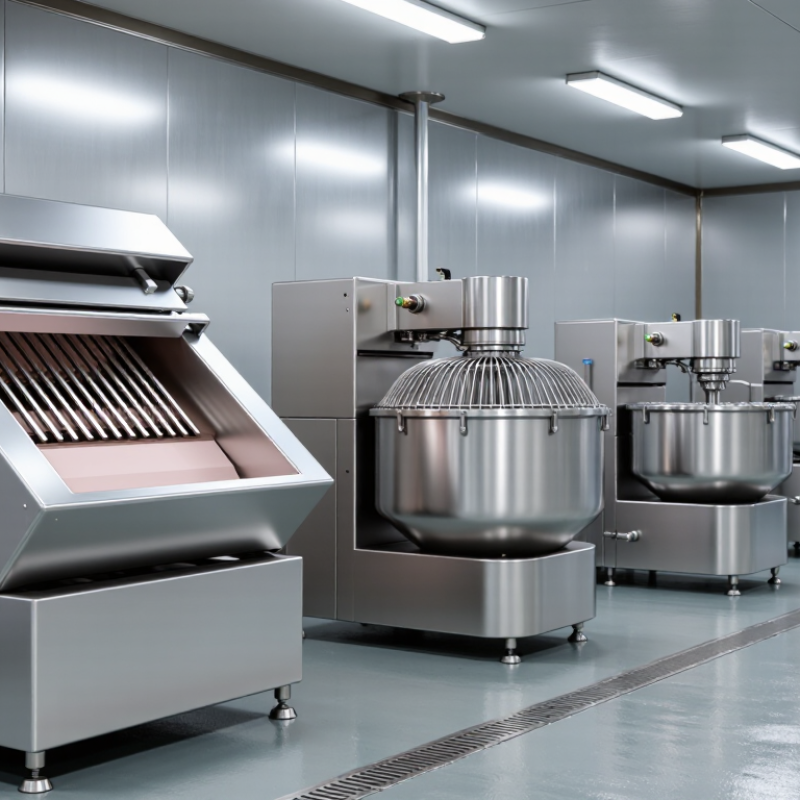
2026 Best Meat Mixer for Global Buyers?

Choosing the 2026 best Meat Mixer requires more than comparing motor power or advertised capacity. Global buyers face different production targets, labor costs, sanitation rules, and export requirements. A 50-kilogram batch mixer may suit a regional sausage plant. A 500-kilogram ribbon mixer may fit a high-volume processor. The wrong choice becomes expensive quickly.

Industry data supports careful evaluation. The OECD-FAO Agricultural Outlook 2024–2033 expects global meat consumption to continue rising, with poultry contributing strongly to future growth. The FAO also emphasizes efficiency, food safety, and resilient supply chains across modern livestock systems. Meanwhile, Grand View Research identifies steady expansion in the global meat processing equipment market through 2030. These trends suggest growing demand for reliable mixing equipment, but market growth alone does not identify the right machine.

Performance must be tested with real recipes. Meat temperature, fat content, curing ingredients, batch size, and mixing time can change results. Hygienic design matters just as much. Buyers should review cleanability, weld quality, drainage, guarding, electrical compatibility, and documentation against recognized standards. EHEDG guidance and applicable 3-A Sanitary Standards can provide useful reference points, although local certification remains essential.

Not every “best” mixer performs equally. Some machines mix quickly but damage delicate particles. Others save labor yet require difficult cleaning. Energy figures may also look attractive without showing full operating conditions. This guide compares mixer types, materials, controls, maintenance needs, supplier support, and total ownership cost. It also questions common specifications, because impressive numbers are not always practical evidence.

2026 Best Meat Mixer for Global Buyers?

What Is a Meat Mixer and Why Does It Matter in 2026?

2026 Best Meat Mixer for Global Buyers?

A meat mixer combines minced meat, fat, water, seasonings, and functional ingredients into a consistent batch. Its purpose sounds simple. The details are not. Mixing affects texture, portion accuracy, cooking performance, and final yield. In 2024, the FAO Food Outlook estimated global meat production at about 367 million tonnes. That scale increases pressure on processors to reduce variation and material loss.

For global buyers, a suitable mixer should match the product, batch size, and sanitation system. Paddle mixers often handle delicate products with less smearing, while ribbon designs can support heavier blends. Vacuum mixing may improve density and reduce trapped air, but it also increases equipment cost and maintenance demands. The OECD-FAO Agricultural Outlook 2024–2033 expects continued growth in global meat demand, especially in middle-income markets. More volume does not automatically mean better equipment.

Look closely at working capacity, discharge design, shaft sealing, washdown access, and control accuracy. Stainless steel alone is not proof of hygienic design. The European Hygienic Engineering and Design Group emphasizes cleanability, drainability, and minimized contamination risks in food equipment. Ask for product trials using your actual meat temperature and formulation. Laboratory claims can disappoint on a busy production floor. I would also check spare-part availability, operator training, and local service response before approving a purchase. That step is often missed. A cheaper mixer may become expensive when downtime, uneven batches, and difficult cleaning are counted.

Key Types of Meat Mixers for Different Global Processing Needs

2026 Best Meat Mixer for Global Buyers?

Key Types of Meat Mixers for Different Global Processing Needs

Choosing the best meat mixer depends on product texture, batch size, and local processing conditions. The wrong machine can create uneven seasoning or unnecessary waste. For sausage, burger, and seasoned mince production, horizontal mixers are widely used. Their paddles or ribbons move meat through the chamber without excessive crushing. This helps preserve visible texture. In practical plant evaluations, discharge speed often matters as much as mixing quality. Operators need clean access, smooth welds, and simple controls.

Ribbon mixers handle dry seasoning and heavier batches efficiently. They suit medium and large processors with predictable recipes. However, they may not be ideal for delicate products. Paddle mixers provide gentler movement and easier product release. Vacuum mixers remove trapped air during processing. This can improve density, color stability, and slicing performance. Vacuum systems also require stronger seals and careful maintenance. Small plants may find this investment difficult.

Continuous mixers support high-volume operations with steady ingredient feeding. They require accurate dosing and trained operators. Batch mixers are more flexible for changing recipes or seasonal demand. Global buyers should check voltage, safety systems, cleaning procedures, and spare-part availability. Local service access can prevent long production delays. I have seen buyers focus too heavily on capacity. A larger mixer is not always better. Consider actual batch weight, floor space, loading height, and future labor skills. A careful trial with real meat and seasoning is still the most reliable test.

Essential Features to Compare Before Choosing a Meat Mixer

Choosing the best meat mixer in 2026 starts with process conditions, not catalogue claims. The OECD-FAO Agricultural Outlook 2024-2033 projects global meat production to grow about 12% by 2033. That growth increases pressure on mixing speed, batch consistency, and cleaning routines. A suitable machine should match daily volume, meat temperature, fat content, and recipe viscosity. Oversizing can waste energy. Undersizing can overheat the mixture.

Check the mixing chamber first. Stainless steel construction, rounded corners, and tool-free access reduce residue around seals and paddles. The U.S. FDA Food Code emphasizes equipment that is cleanable, durable, and resistant to corrosion. Ask for documented surface specifications, not vague “food-grade” language. Drainage matters. A small pool of meat paste can become a serious hygiene concern.

Then test control and safety features. Variable-speed drives help operators handle coarse and fine recipes without damaging texture. Load sensors can prevent motor strain, but they are not perfect. I would request a factory test using your actual batch size and formulation. Watch discharge time, temperature rise, noise, and leftover material. The mistake is trusting brochure capacity alone. Also compare electrical standards, spare-part access, emergency stops, guarding, and training documents. Reliable suppliers should provide validation records and clear maintenance intervals, especially for international installations.

How to Evaluate Capacity, Materials, Safety, and Efficiency

For global buyers, capacity starts with batch size, not the biggest brochure number. A 100-kilogram hopper may produce less when frozen cubes bridge the inlet. Measure working volume at 70–80% fill. Then check torque using your real recipe, meat temperature, and fat ratio. Request factory trials with at least two batches. One test is never enough. Record mixing time, loading time, and discharge losses.

Material selection affects sanitation and service life. Food-contact areas should use corrosion-resistant stainless steel, with smooth welds and minimal crevices. Grade 304 may suit many recipes, while salty or acidic mixtures can require stronger corrosion resistance. Confirm certificates, surface finish, gasket compatibility, and cleaning instructions. ISO 14159 and EN 1672-2 provide useful hygiene and safety references. The WHO estimates 600 million foodborne illness cases annually. Small design gaps matter. I would inspect the mixer personally, because photographs hide poor drainage.

Efficiency means more than motor power. Compare kilograms per kilowatt-hour, cycle duration, unloading speed, and washdown labor. The U.S. Department of Energy reports that motor-driven systems consume over half of industrial electricity in many facilities. Variable-speed control can reduce unnecessary load, but only when torque remains stable. Check lid interlocks, emergency stops, guards, and restart protection. Ask for noise and vibration measurements. Claimed efficiency can be optimistic. Your own recipe may expose that weakness.

2026 Best Meat Mixer for Global Buyers? - How to Evaluate Capacity, Materials, Safety, and Efficiency

Practical comparison of common commercial meat-mixer configurations. Values are typical purchasing benchmarks rather than brand-specific specifications.

Mixer Category Typical Batch Capacity Recommended Working Load Typical Motor Range Common Construction Materials Safety and Hygiene Features to Check Typical Mixing Time Best Application
Compact countertop mixer 5–20 kg per batch 60–80% of bowl volume 0.37–1.1 kW Food-contact bowl and paddles in stainless steel; painted or stainless-steel outer housing Lid interlock, emergency stop, non-slip feet, removable food-contact parts, smooth welds 3–8 minutes Small butcher shops, restaurants, test kitchens, and specialty food production
Standard floor mixer 25–100 kg per batch 50–75% of bowl volume 1.1–4 kW Stainless-steel bowl and mixing tools; stainless or coated structural frame Safety cover switch, overload protection, emergency stop, lockable casters or fixed feet 4–10 minutes Retail meat processing, catering kitchens, and medium-volume sausage production
Heavy-duty industrial mixer 100–500 kg per batch 50–70% of bowl volume 4–22 kW 304 stainless steel is common; 316 stainless steel may be selected for higher corrosion resistance Guarded drive system, access-door interlock, emergency-stop circuit, overload and phase-loss protection 5–15 minutes Central kitchens, processing plants, and high-volume prepared-meat production
Vacuum meat mixer 50–500 kg per batch 50–70% of bowl volume 3–30 kW, plus vacuum pump Stainless-steel product chamber, sealed lid, sanitary fittings, corrosion-resistant vacuum components Vacuum-release control, lid locking, pressure or vacuum monitoring, emergency stop, cleanable seals 5–20 minutes Products requiring reduced air incorporation, improved binding, or more consistent texture
Tilting or discharge mixer 50–300 kg per batch 50–70% of bowl volume 2.2–15 kW Stainless-steel bowl and paddles; stainless or heavy coated frame Controlled discharge movement, anti-crush protection, mechanical stops, guarded hydraulic or electric components 4–12 minutes Operations that need faster unloading into tubs, fillers, conveyors, or portioning equipment
Evaluation Dimension What Global Buyers Should Verify Preferred Benchmark Why It Matters Priority
Capacity selection Batch size, product density, ingredient ratio, available floor space, and expected production cycles per hour Select a usable working load of approximately 50–80% of the nominal bowl volume Overfilling reduces mixing uniformity, increases motor load, and can extend processing time Critical
Food-contact materials Material grade, surface finish, weld quality, crevice-free design, and resistance to salt, acids, and cleaning chemicals Use food-contact stainless steel; consider 316 stainless steel for aggressive or high-salt environments Suitable materials improve hygiene, corrosion resistance, service life, and cleanability Critical
Mixing system Paddle or ribbon geometry, shaft arrangement, rotation direction, scraping performance, and recipe compatibility The mixer should achieve uniform distribution without excessive smearing, crushing, or temperature rise Mixing action directly affects texture, bind, seasoning distribution, and product consistency Critical
Temperature control Product starting temperature, mixing duration, motor heat transfer, room temperature, and cooling options Confirm that the process keeps the product within the buyer’s validated food-safety and quality limits Excessive temperature increase can affect texture, fat stability, shelf life, and food safety Critical
Operator safety Emergency stop, lid interlock, overload protection, guarded transmission, anti-restart function, and safe access for cleaning Require documented risk assessment and conformity with applicable local machinery and electrical rules Safety systems reduce injury risk and support regulatory acceptance in different markets Critical
Cleaning and sanitation Tool removal, drainability, access to hidden areas, seal design, washdown rating, and cleaning instructions Prefer smooth, accessible, tool-free or low-tool disassembly of food-contact components Efficient sanitation lowers downtime and helps prevent cross-contamination Critical
Energy efficiency Motor efficiency, variable-speed control, standby consumption, batch time, and actual load profile Compare energy per kilogram of finished product rather than motor rating alone A smaller efficient motor may consume less energy when properly matched to the recipe and load High
Electrical compatibility Supply voltage, frequency, phase, control-panel language, plug configuration, and protection class Confirm compatibility with the destination country before purchase; three-phase power is common for larger mixers Incorrect electrical specifications can cause unsafe operation, delays, or additional installation cost High
Maintenance and service Availability of seals, bearings, belts, gear components, sensors, manuals, and remote technical support Request a parts list, preventive-maintenance schedule, and expected replacement intervals Serviceability affects lifetime cost and production continuity more than purchase price alone High
Total cost of ownership Purchase price, freight, import duties, installation, training, utilities, sanitation labor, and spare parts Compare cost per usable batch and cost per kilogram over the expected operating period The lowest initial price may not provide the lowest long-term operating cost High
Important purchasing note: Actual capacity, mixing time, energy use, and throughput depend on bowl geometry, meat temperature, fat content, particle size, recipe viscosity, loading method, and operator practice. Buyers should request a product trial or sample-batch test and verify all electrical, sanitation, safety, and import requirements for the destination market.

Best Meat Mixer Selection Criteria for International Buyers

2026 Best Meat Mixer for Global Buyers?

International buyers should judge a meat mixer by working conditions, not attractive specifications. Start with batch size, mixing speed, and product temperature. A machine for a small butcher shop should not be oversized. Large equipment can waste energy and floor space. Confirm whether the bowl handles fresh meat, frozen pieces, or both.

Electrical compatibility is essential. Check voltage, frequency, phase, plug type, and motor protection before ordering. A mismatch can delay installation or damage equipment. Stainless steel contact surfaces should resist corrosion and support easy cleaning. Look closely at welds, corners, seals, and discharge gates. These areas often collect residue. Ask for cleaning instructions, spare-parts lists, and maintenance intervals.

Safety documentation also matters. Request test reports and conformity documents required in the destination market. Do not rely on a general certificate without checking its scope. Experienced buyers should inspect emergency stops, guards, overload protection, and noise levels. Remote video testing can reveal useful details, but it is not equal to a physical inspection. A mixer may perform well during a short demonstration and struggle after repeated batches. That possibility deserves attention.

Supplier support can decide the real cost. Confirm installation guidance, language options, response times, packaging standards, and warranty terms. Wooden crates, moisture barriers, and shock protection matter during long transport. Calculate cleaning labor, electricity use, downtime, and replacement parts. A simple spreadsheet helps, but it can still miss local service limitations. Ask practical questions. Then compare verified evidence, not promises.

Go to Top